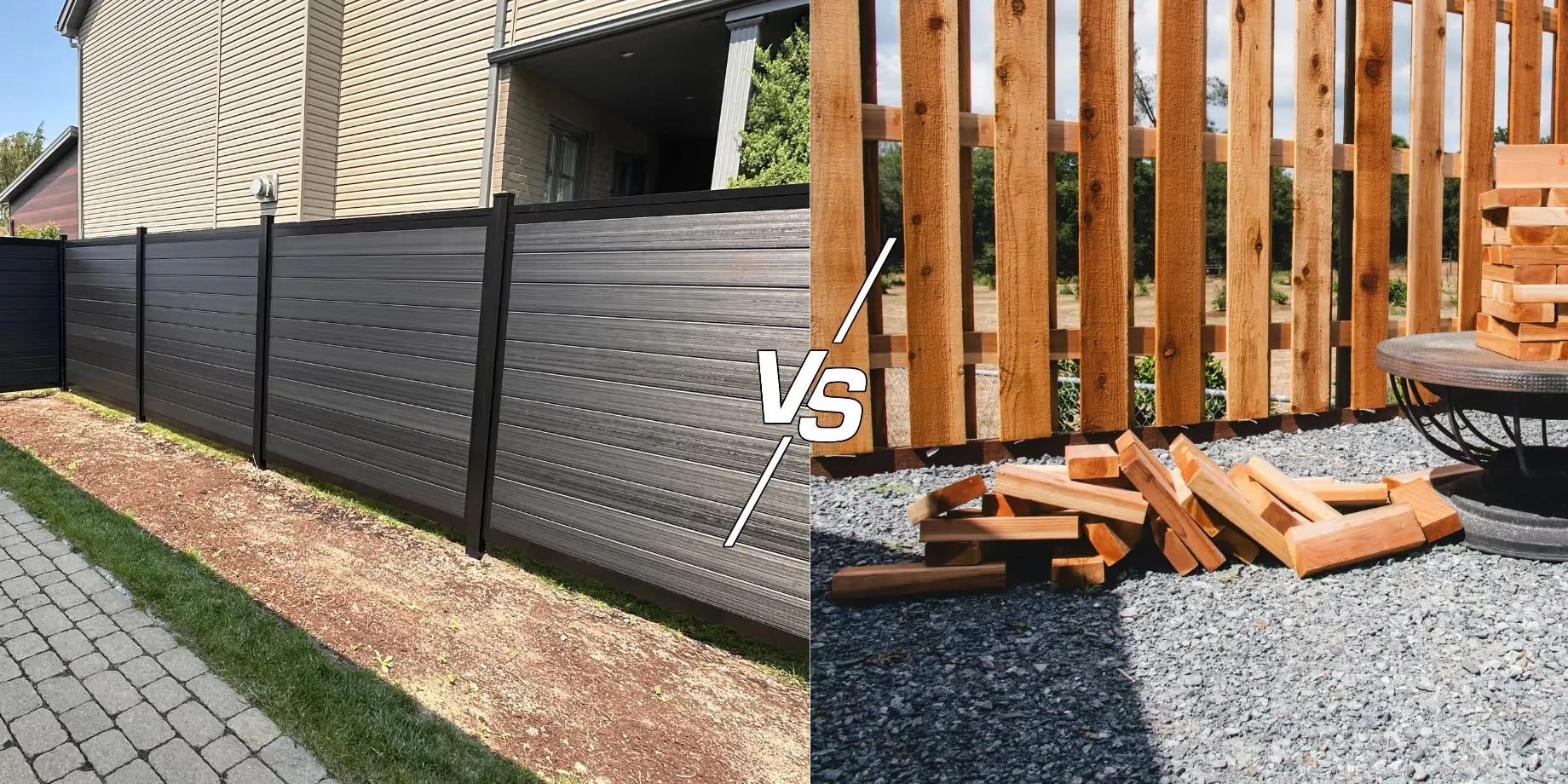
Wood offers a warm, natural appearance and is typically less expensive upfront. However, in Quebec, property owners must account for the following:
- Stain or sealant every 2-3 years
- Warping and cracking caused by freeze-thaw cycles
- 10 to 15-year lifespan, with visible wear showing well before that
- Risk of splinters
Composite provides the appearance of wood without the ongoing maintenance:
- One soap wash per year is all that is required
- Withstands Quebec winters without warping or cracking
- 25+ year lifespan
- No splinters, with a consistent appearance that endures over time
The upfront cost is higher, which is the primary consideration for most buyers.
To see available colours and profiles, check out our composite fence page.
Over 15 years, wood accumulates significant costs: approximately 5 stain applications, plus board replacements. Composite represents a one-time, predictable investment. Over this period, the initial price difference is typically offset by reduced maintenance expenses.
Wood is suitable for those who prioritize the upfront budget and appreciate the rustic aesthetic, while accepting the regular maintenance commitment.
Composite is the preferred choice for those seeking long-term reliability. It requires no maintenance, no replacements, and delivers lasting performance well beyond current trends.