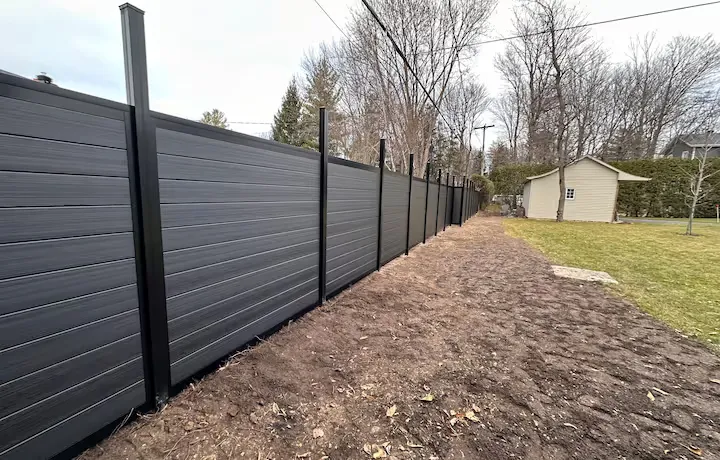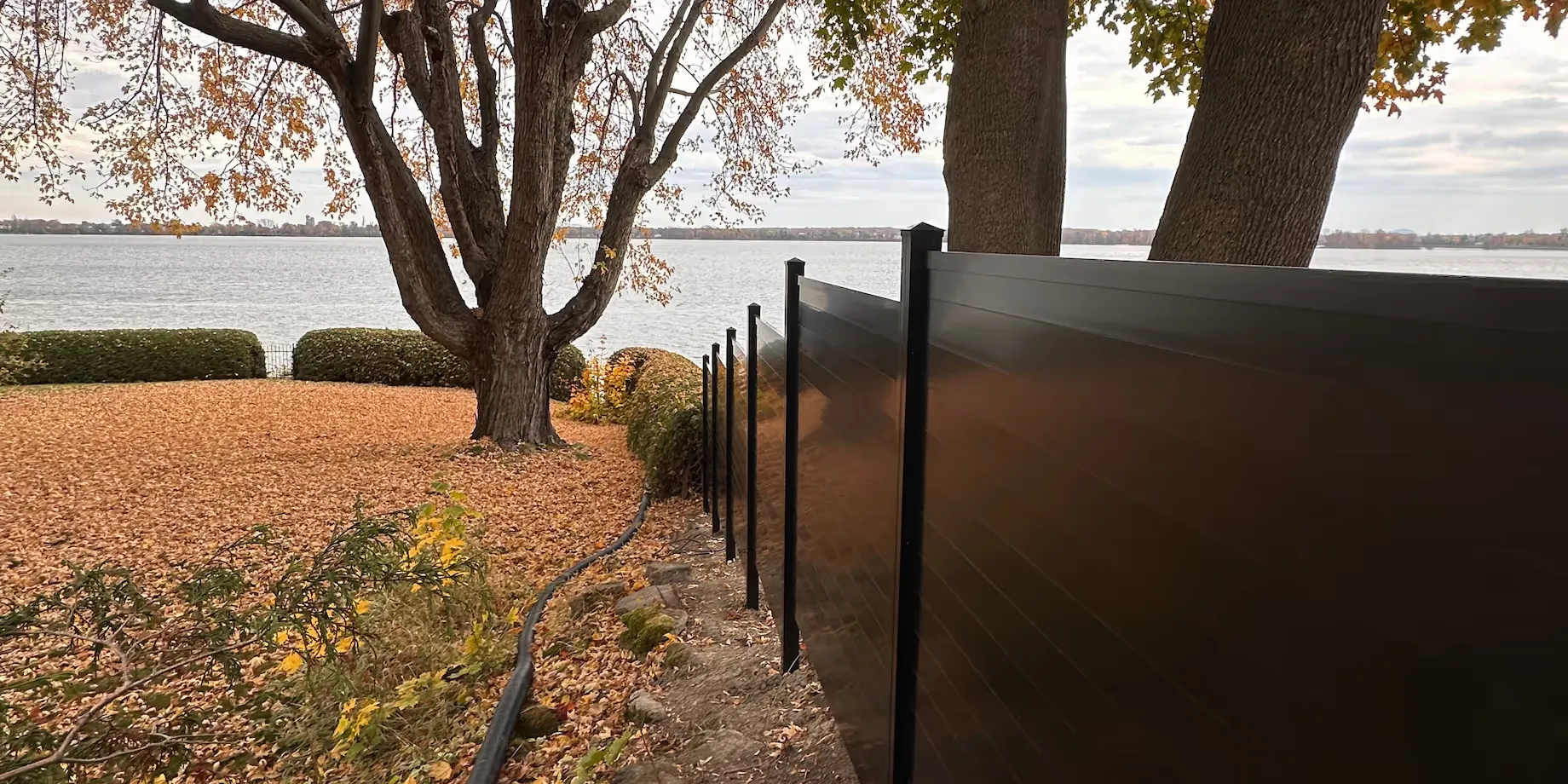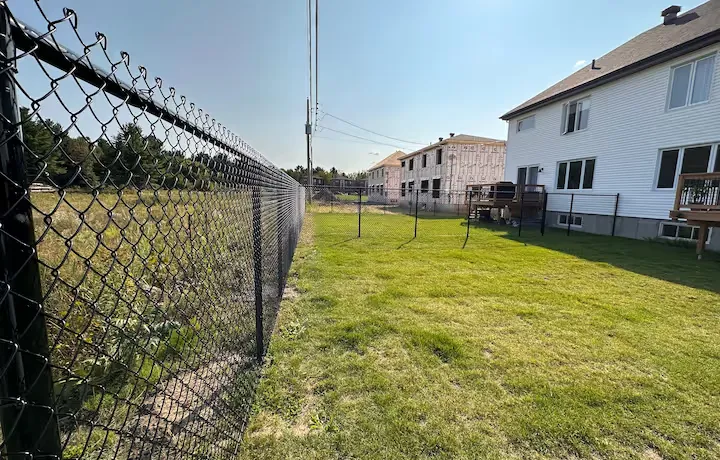
A fence is shared (mitoyenne) when it's installed exactly on the line separating two private properties. The Civil Code presumes that any fence on the lot line is common property.
This differs from a private fence, which is installed entirely on one owner's property -- even a few inches from the line. In that case, the fence belongs solely to that owner.
In Quebec, every property owner has the legal right to fence their land at their own expense. This is a fundamental right. A fence may be installed entirely on one's own property without requiring the neighbour's consent.
But when you want to build on the lot line, the rules change.
For a fence on the property line, the Civil Code is clear: construction and maintenance costs are split equally between the two owners.
Three principles to follow:
- The fence must serve a common need (privacy or security, for example)
- Costs must be reasonable -- a neighbour cannot be compelled to pay half for a high-end ornamental fence if a standard option adequately serves the purpose
- An agreement before work begins is always better
1. Initiate the conversation early -- Weeks or months before the planned installation date.
2. Present options -- Provide material choices, photos, and detailed quotes for review.
3. Be receptive -- Your neighbour may prefer a different style, height, or privacy level.
4. Document the agreement in writing -- A simple document signed by both parties prevents future misunderstandings.
If the neighbour refuses to contribute:
- A formal notice (registered letter) explaining the project and the Civil Code's legal basis often resolves the matter.
- Mediation can help find common ground.
- As a last resort, the fence can be installed entirely on the initiating owner's property. The full cost is borne by that owner, but the fence remains their sole property and no third-party approval is required.
In a shared fence scenario, both neighbours will live with the result for years to come. Materials that present an identical appearance on both sides and require no maintenance are strongly recommended -- otherwise, maintenance responsibility quickly becomes a source of disagreement.
Composite and PVC are well-suited options: the panels present an identical appearance from both sides, the colours remain consistent over time, and no painting is ever required. Zen aluminum is another effective choice, with its symmetrical horizontal lines providing a uniform finish on both sides.